
CALMS support section is here to help you.
This FAQ document is designed for service providers, distributors, and partners. It addresses technical, commercial, and strategic concerns while providing direct paths to the technical documentation of CALMS.
We hope that Frequently Asked Questions below will help with the most problems. If you can’t find answer to your question feel free to contact us on: info@calms.comSection 1: Objectivity & Brand Neutrality
Q: Does CALMS really measure objectively, or does it negatively evaluate the manufacturer of my compressors?
A: CALMS is a vendor - neutral platform. It measures physical parameters (power, pressure, flow) based on international standards like ISO 1217. It evaluates the efficiency of the system, not the brand.
Q: What if CALMS shows that the system I sold consumes too much energy?
A: CALMS identifies optimization potential, not just faults. High energy consumption is often due to system design, leaks, or changing demand - all of which provide you with service and upgrade opportunities.
Q: How can I sell CALMS without disparaging the products I have sold?
A: Position CALMS as a “fitness tracker” for the system. Even the best hardware needs monitoring to maintain peak performance against “threats” such as leaks and wear.
Q: Can CALMS monitor other utilities besides compressed air?
A: Yes. The platform is designed for multi-utility monitoring, including electricity, vacuum, nitrogen and water, providing a holistic factory view.
Section 2: Technical Integrations & Installation
Q: Can CALMS communicate with all compressor brands?
A: Yes, CALMS is a hardware-agnostic. It can collect data via different communication protocols like the widely-used Modbus RTU/TCP protocol, OPC UA protocol, read analog signals (4-20mA input) or digital inputs from any manufacturer.
Q: How complex is the installation and calibration?
A: CALMS edge devices (CAL-EDGE-0 , CAL-EDGE-8 and CAL-EDGE-PM) used primarily for monitoring values are designed to be “Plug & Play” devices. Configuration is done via a user-friendly web interface and sensors are pre-calibrated or configured through standard industry protocols. Detailed instructions are also available on the documentation page with technical support prepared to help and answer any additional questions.
The CALMS control devices (CAL-PM-X and CAL-PM-BASIC-4) are the most complex CALMS devices therefore for each device CALMS ensures the customers receive customized electrical schematic where it is shown how to electrically install and wire the CALMS device to your equipment. Furthermore, additional detailed instructions are available on the documentation page as well as technical support to help.
Q: Do I have to intervene in the compressor`s internal wiring/logic when installing CALMS devices?
A: No, CALMS typically acts as a “listener”. The devices used for monitoring only collect data without interfering with the internal safety or operational logic of the compressor PLC.
The CALMS devices used for control are prepared based on the compressors and what possibilities they have and use the already-available signals of the compressors to control them. Changing parameters in the compressor`s internal logic and wiring might happen but only in accordance with the compressor`s user manuals and operation guides and consulting the CALMS team if needed.
Q: Can CALMS read data directly from the compressors?
A: Depending on the CALMS device you have it can offer different possibilities. The CALMS monitoring devices support the Modbus RTU/TCP protocol so it`s necessary that the compressors or the compressed air equipment supports these protocols.
The more advanced devices like the CAL-PM-X offer more possibilities, like hard-wiring the compressor states for monitoring them (if it is running, in trip, loaded or unloaded), reading data via Modbus RTU/TCP protocol.
Q: How to create a CALMS system and connect edge loggers?
To create system check out video tutorials
Quick measurement device connection guide for audits with CAL-EDGE-0 and CAL-EDGE-8:
Getting started with the CAL-EDGE-0 device
Getting started with the CAL-EDGE-8 device
Q: Is it important to fill all the data in the P&ID schematic on CALMS ?
Yes. All calculations are based on data that you enter to P&ID scheme.
So it is mandatory to fill in all the accurate information for the compressors for the calculations later. Next, it is also mandatory to correctly add and configure analog sensors (with choosing the correct analog input, quantity the sensor measures, its unit and range that is usually in the documentation for the sensor).
Strongly suggested is to label the different channels of the sensors appropriately for a more organized view while monitoring the data or generating different reports.
Q: How to add compressor detail data on CALMS?
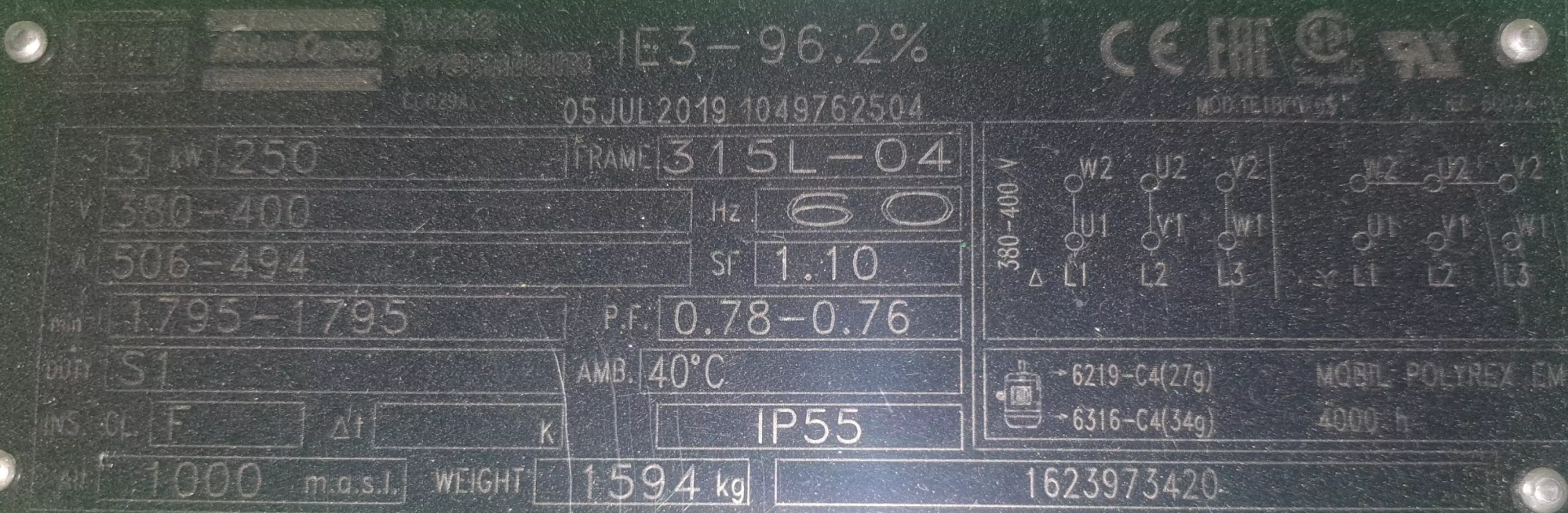
A: To find the compressor details what first needs to be checked is the nameplate for the compressor. Next, you can also check the CAGI page (Compressed Air & Gas Institute), https://www.cagi.org/
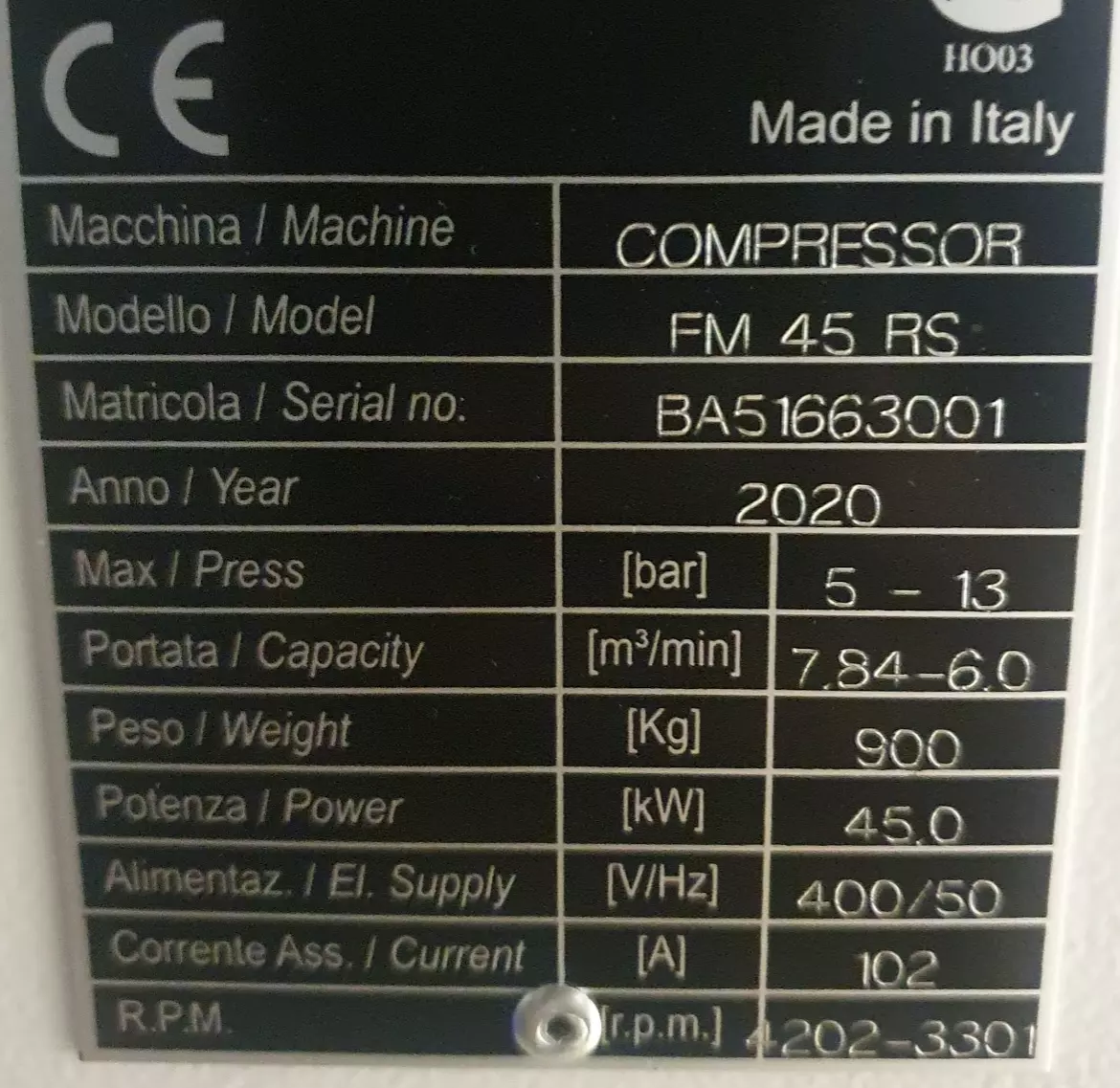
After you have all the information, fill in the information on CALMS.
Q: How to set correct date and number format?
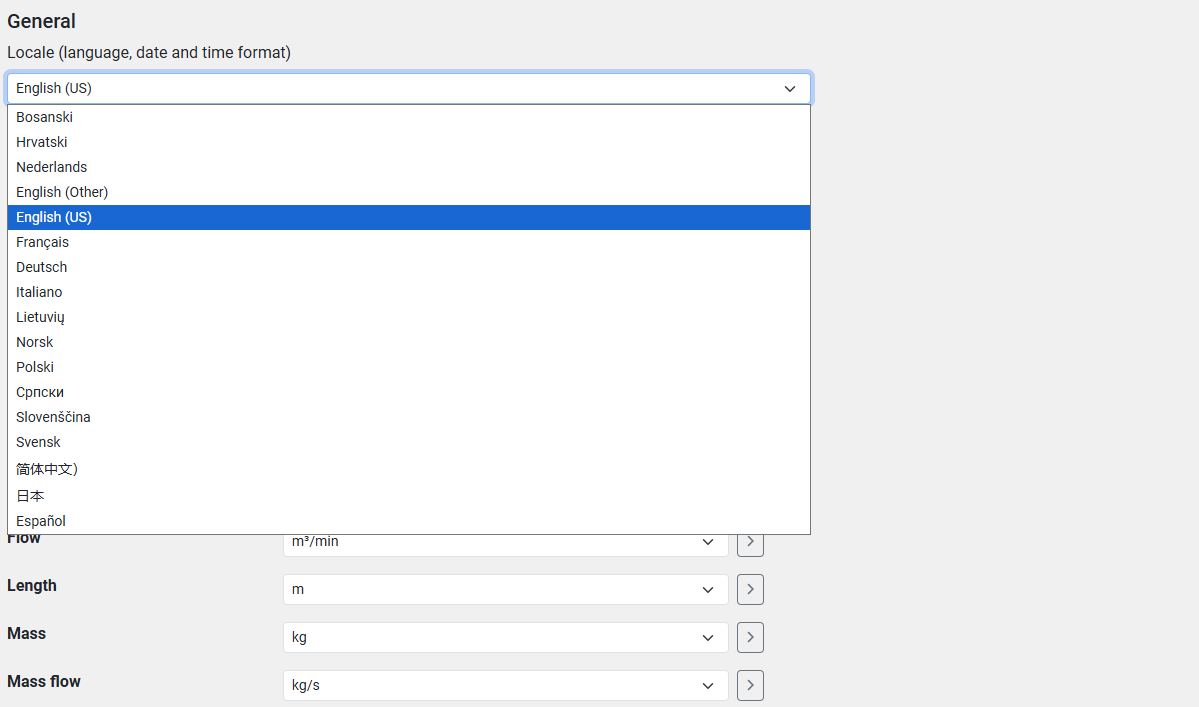
A: When you select your language from CALMS Settings, date format will be automatically in your local format. For English speaking users use English US for MM/DD/YYYY and English Other for DD/MM/YYYY format. Number format decimal dot or comma will be auto detected from your browser setting.
Q: Can I use my own local SIM card instead of CALMS SIM card?
A: You can use your local SIM cards but at your own risk.
Here are some reasons / points why we would really like for all partners to use our sim cards:
- You do not have to change SIM card and APN.
- Our SIM cards can use multiple network providers. If one fails / loses signal / has a bad signal it can reconnect to another network provider.
- Local network providers often have a bad habit of rejecting, throttling or limiting connection if the device is not used with a mobile phone. So this was often a problem for our IOT devices. Also this problem often occurs after some time (a few weeks or a few months) - so you are not able to detect this at the beginning.
- Some local network providers forbid usage for IOT or require different contracts.
- Our SIM card provider has a contract with all the major networks in almost every country to provide reliable service for IOT devices.
- If a connection fails with our sim cards, we can find out the reason why, and we can fix it. If connection fails on your network provider, there is nothing we can do to check why your carrier dropped connection.
- Because we cannot discover the full reason why your connection failed we can offer no support on connection issues.
In most cases, the problems will be with the connectivity and the provider, which we don’t have access to if you use local SIM cards.
If you do choose to use your own SIM card, make sure you have enough data. Normally we need volume for about 300MB a month, but we suggest getting 2 GB per month so there is enough for updates.
Section 3: Data, Security & Privacy
Q: Where is the data stored - in the cloud or locally?
A: CALMS is a cloud-based platform (SaaS) for global accessibility, but local data buffering is handled by the Edge device to prevent data loss during internet outages.
Q: How do I protect my customer contacts? Who gets the data?
A: Data ownership remains with the customer/partner. CALMS uses multi-tenant architecture to ensure that your customer data is isolated and visible only to authorized users.
Q: Can CALMS be integrated into my ERP/CRM system?
A: Yes, CALMS offers a robust API (REST API) that allows you to push data into your own business systems for automated billing or service scheduling.
Q: Is the CALMS Edge device cybersecurity certified?
A: We utilize encrypted communication (HTTPS/TLS) and outbound-only connections to ensure the device does not create a vulnerability in the customer`s IT firewall.
Q: Does CALMS support ISO 50001 certification?
A: Yes, CALMS provides the automated data collection and reporting structures required for Energy Management Systems (EnMS) according to ISO 50001 and ISO 50003.
Section 4: Business Value & ROI
Q: How much will the system cost me - and how much will I earn?
A: CALMS moves you from “one-off” sales to recurring service revenue. You earn from the hardware sale, the SaaS subscription and the repair word identified by the platform (e.g. leak fixing).
Q: How long does it take for the customer to see ROI ?
A: Most customers see ROI in less than 12 months. Leak detection and pressure optimization alone often yield 10-20% energy savings immediately.
Q: Our compressors already have intelligent controls - what does CALMS add?
A: Manufacturer controls focus on the machine. CALMS focuses on the entire system (leaks, piping, end-use). CALMS also provides independent validation and cross-brand benchmarking.
Q: How to invite new end-user, expert to the System on CALMS?
A: When you are adding user, expert to system you have to follow these steps:
- Choose a system
- Setup
- Permissions
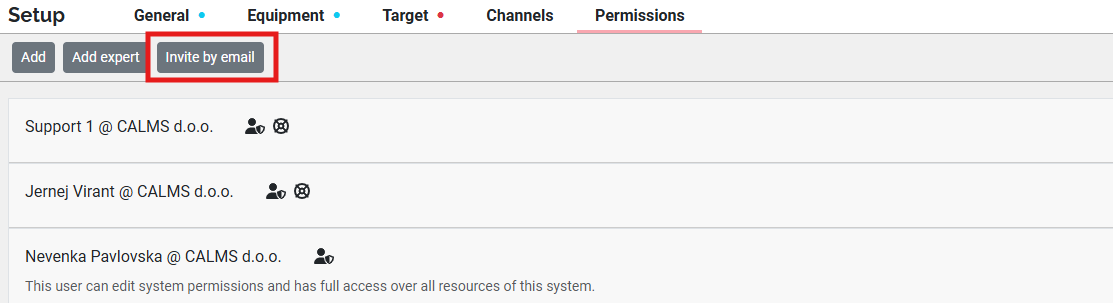
- Add or invite by email
Before adding new user to the system check if user already exits.
1.If user exists: Then click on Add in the top right corner and type username.
2.If user doesn’t exist: Then click *Invite by email*and type email.
5.Send invite(only if there is no user before)
You can find these answer also in CALMS Web interface manual under section 2.3 Adding user
Section 5: Subscriptions & Billing
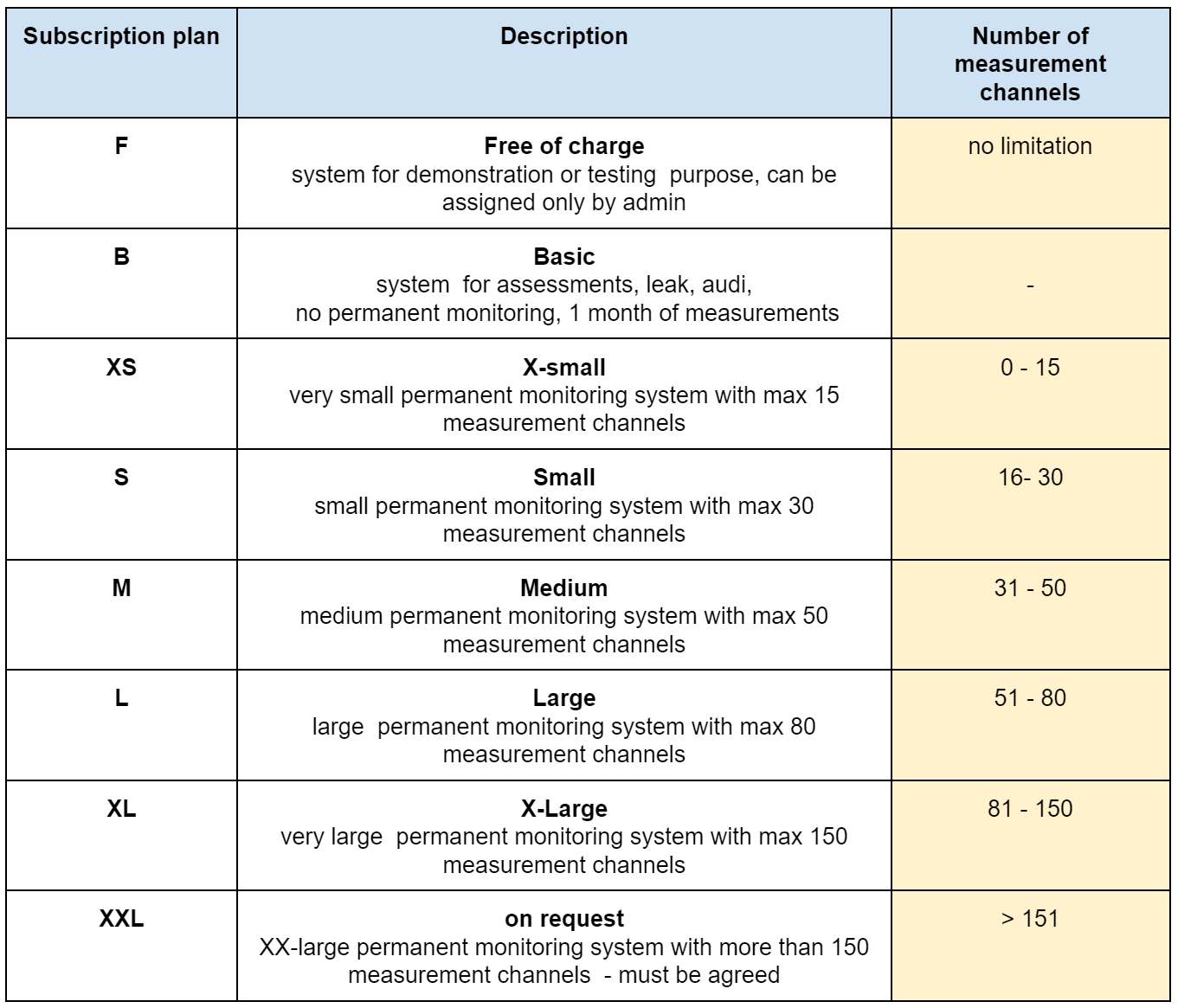
Q: What is a CALMS subscription plan and what types of subscription plans exist?
A: Each system in CALMS must have a selected subscription plan. The subscription plan is valid for one year. After one year, the subscription plan can be renewed (extended) or the system is automatically locked (disabled) and can no longer be used. Depending on the type of system, the system manager needs to select the correct subscription plan.
Q: When is B subscription plan used?
A: B subscription (Basic) plan is used when the system is used to:
- Create a system review
- Create a leak audit
- Create an audit (1 month of monitoring without any channel number limitation)
- Check past data and results
B subscription plan is not used when we have permanent monitoring in the system.
Q: How to perform an audit in the system with a B subscription plan?
A: When the system manager selects »B« subscription plan for a system a 1 month audit without any channel number limitation can be performed.
One month period starts when the audit is activated by pressing the »Activate until« button in General Setup page:

After one month period, all measurement channels must be disabled (NOT deleted, just disabled) otherwise the system will be locked (disabled) after a few days. The manager of the system also get a notification that there are too many measurement channels in the system.
Q: How to perform a two-month audit?
A: If a longer audit is to be performed you need to use another »B« credit. When the first one month of unlimited audit expires you just click on Change plan button and selects »B« subscription plan one more time. System will provide you the option to click on »Activate until« button once again.
Q: When is an F subscription plan used?
A: F subscription plan is used only for Demo systems and other special systems. F subscription plan can be only assigned by the System admin. System manager (partner) cannot select F subscription plan.
When system is subscribed with an F subscription plan there is no limitation at all in the system.
Q: When is “XS”, “S”, “M”, “L”, “XL” subscription plan used?
A: All these subscription plans are used when system is used for a permanent monitoring. Which subscription plan is used depends on a number of measurement channels. Only limitation in these subscriptions plans is a number of measurement channels. See the table for more details.
Q: What to do when the system was subscribed with the wrong subscription plan?
A: If the system manager has subscribed system with the wrong subscription plan he contacts CALMS support team and explains what is the problem. Usually, that happens:
- With a new system where the system manager does not know how many measurement channels will be monitored
- System manager accidentally selects the wrong subscription plan
Q: Billing notifications
A: CALMS sends notifications to users when next conditions are met:
- The manager of the system gets a notification one month before the subscription plan expires. The manager has one month to extend the subscription of the system.
- The manager of the system gets a notification that system has already expired. Manager needs to extend the subscription immediately, because system will be locked in a few days.
- The manager of the system gets a notification if there is too many measurement channels in the system. For example, if system is on an »S« subscription plan it means that not more than 30 measurement channels can be added.
Section 6: Compressed Air Fundamentals
Q: In the receiver what is the difference between upstream and downstream?
A: Upstream receivers are the receivers in the CA room ( normally wet receivers), downstream receivers are the receivers at the production side (usually dry receivers). Some of all receivers must be actual size of all receivers installed in the facility.
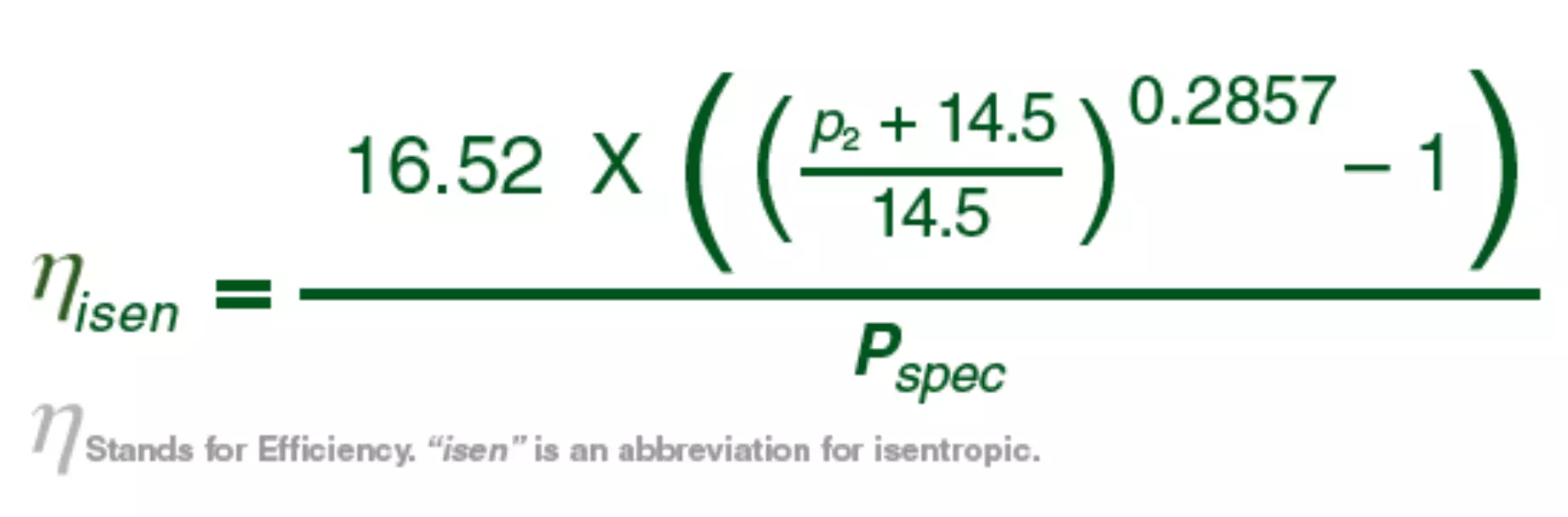
Q: Isentropic efficiency for comparing systems and compressors ?
A: Isentropic Efficiency (IE) indicates how efficiently a compressor converts electrical energy into compressed air potential energy. The higher the percentage, the better the compressor is at converting electrical energy into compressed air. It’s a simple ratio:
Isentropic Efficiency (%) = Energy (kW) for the Ideal Compression Process / Actual Energy (kW) Consumed
Compressed air system have typical IE around 70%, worst case 50% and best system up to 90%.
Simple calculation for isentropic efficiency for comparing screw compressors, independent from pressure. Isentropic Efficiency normalizes the comparison to simplify the evaluation of efficiency in like sized compressors.
Useful link: https://www.airbestpractices.com/standards/iso-and-cagi/isentropic-efficiency-rotary-screw-air-compressors
Q: What is electric motor Power Factor (cos φ) and Efficiency and how to get it?
A: The power factor is the ratio of the true and apparent power. You can find this data on electric motor nameplate or in the technical documentation of your machine. It is good practice also to measure it.
Power Factor (cos φ)= True power(kW) / Apparent power(kVA)
Efficiency = Output (kW) / Input(kW)
Efficiency and Power Factor are not the same !
Usually for full loaded power values for cos fi are 0,85 - 0,95. Values for cos fi at unloaded power are 0,4-0,6 .
Typical industrial electric motor Efficiency is from 50-350HP is 0.9
- 0.96.